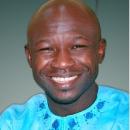
Dr Abdoul Kader Ilboudo is a medical doctor and infectious-disease epidemiologist with over ten years of field and research experience across Burkina Faso, working at the interface of human, animal and environmental health. He is based at the Institut de Recherche en Sciences de la Santé (IRSS) in Burkina Faso, within the Unit of Epidemic-Prone, Emerging Diseases and Zoonoses.
Within this unit, he and his colleagues have investigated and published on a broad range of emerging and re-emerging infectious diseases through a One Health lens: influenza and other acute respiratory infections, viral hepatitis, Crimean- Congo Haemorrhagic Fever, rabies, dengue and other zoonoses. A One Health approach and community strengthening run as a constant thread through this body of work, carried out in collaboration with international institutions including CDC Atlanta, the Friedrich-Loeffler-Institut, Germany (FLI), Freie Universität Berlin (FUB), the International Livestock Research Institute (ILRI), IHE Delft, The Task Force for Global Health (TFGH) and Global Affairs Canada.
He currently coordinates the monitoring, evaluation and community engagement components of ELUZO, a gender-responsive One Health project for zoonosis control and women's empowerment, and for the past five years has coordinated the Influenza Cooperative Agreement project in Burkina Faso, which aims to strengthen avian and human influenza surveillance and response through both institutional and community-level strengthening. He is also in the final stage of his PhD fellowship at the International Livestock Research Institute (ILRI) and Freie Universität Berlin, where his doctoral research on Crimean-Congo Haemorrhagic Fever combines household surveys, spatial risk mapping and multilevel modelling to generate evidence that is accessible and actionable for local communities and policymakers alike.
Dr Ilboudo also leads two civil-society initiatives, Rabies-Free Burkina Faso and "Assault against Viral Hepatitis Burkina Faso", bridging scientific knowledge with grassroots community action. Author of more than 20 peer-reviewed publications, he remains firmly committed to capacity building, module development and mentoring as tools for sustainable, community-owned One Health practice.